Introduction
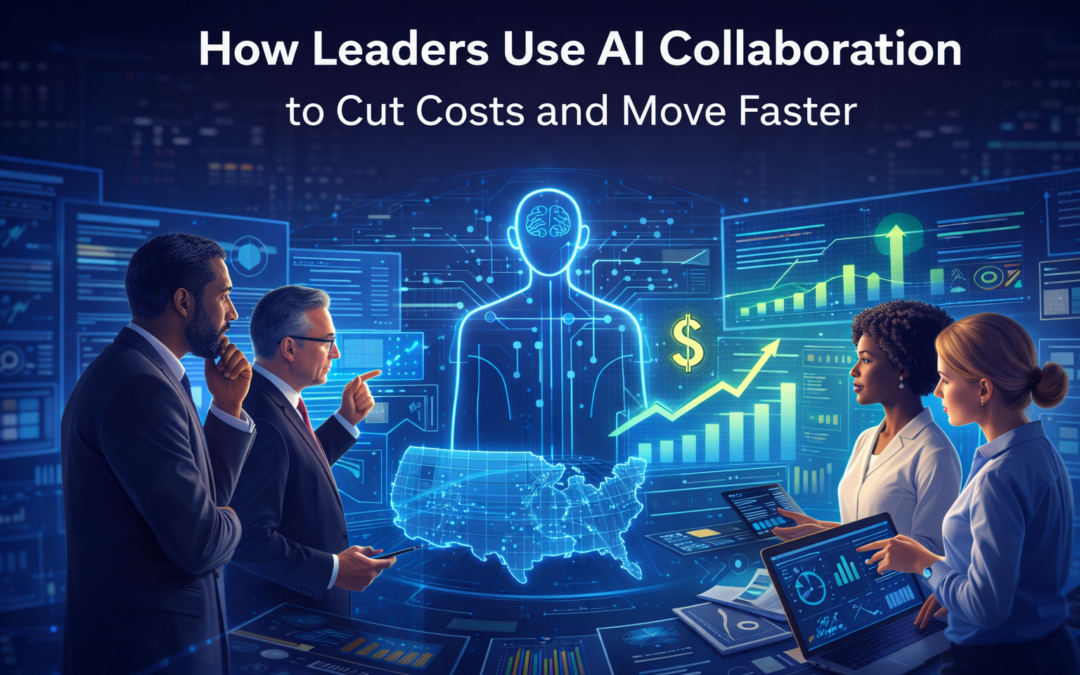
Artificial intelligence isn’t tomorrow’s technology, it’s today’s competitive advantage. More than 90 % of companies report using generative AI to drive innovation, efficiency and competitive advantage. A 2024 survey found that 46 % of executives are already investing in AI to differentiate their organizations, and 73 % plan to use generative AI to transform their business models. In nearly every sector, leaders recognize that learning to work with AI tools is no longer optional.
At Stratic Technologies we help organizations harness the power of AI, cloud, automation, data and infrastructure to modernize operations. This guide explains how intelligent systems work, the business value they deliver and how to apply them across industries.
What AI Collaboration Means for Modern Businesses
AI collaboration describes a new generation of intelligent assistants that combine natural language processing, machine learning and reasoning capabilities. Unlike traditional software that follows rigid workflows, these tools understand context, integrate with your existing systems and adapt to your preferences over time. They automate repetitive tasks, provide real‑time data insights and scale across roles and departments.
Context‑Aware Workspaces
Modern AI assistants maintain context across conversations and projects. By integrating with platforms like Slack, Google Workspace and enterprise systems, they remember previous interactions and understand your business environment. This eliminates the need to repeat information and enables more relevant, personalized responses.
Living Knowledge Resources
Today’s AI tools turn outputs into living documents. Leveraging techniques such as natural language generation, AI can identify relevant insights, recommend visualization types and optimize document layouts. These dynamic “artifacts” update when underlying data or context changes, ensuring your reports, policies and guidelines remain current.
Interactive Data Dashboards
AI‑driven dashboards transform raw data into interactive visualizations. Machine‑learning algorithms not only surface insights but also explain what drives the numbers, making complex information accessible to non‑technical users. Natural language querying lets you ask questions like “show this month’s sales vs. last month” and receive charts or forecasts instantly. Predictive analytics and anomaly detection further help identify trends and risks, enabling faster, data‑driven decisions.
Hybrid Reasoning: Balancing Speed and Depth
Advanced AI models can switch between rapid responses for routine tasks and deeper, step‑by‑step reasoning for complex problems. This “hybrid reasoning” approach means you no longer need separate tools for speed and depth. Whether drafting a quick email or analyzing a large dataset, the AI adapts its reasoning depth to match your needs.
Business Benefits of AI Collaboration
The next generation of AI assistants delivers benefits across every business function. By automating repetitive tasks, they free employees to focus on innovation. Seamless integration with existing tools streamlines workflows. Real‑time analytics help teams make better decisions, and the ability to learn from interactions means the system improves over time. For executives, these capabilities translate into improved efficiency, reduced costs, faster innovation and greater adaptability across the organization.
Industry‑Specific Applications
AI collaboration is not one‑size‑fits‑all. Below are examples of how intelligent systems can transform workflows in key industries served by Stratic Technologies.
Healthcare
Healthcare providers are under pressure to deliver high‑quality, personalized care efficiently. Systematic reviews of AI in healthcare decision‑making show that AI can improve the quality, efficiency and effectiveness of health services by providing accurate, timely and personalized information. AI assists clinicians with diagnosis, treatment planning and predicting outcomes. It also supports patient‑centered care by making services more accessible and tailored to individual needs. For healthcare organizations, intelligent systems can streamline administrative tasks, enhance diagnostics and improve population‑health management.
Government & Public Sector
Generative AI is revolutionizing how public agencies deliver services. A recent commentary noted that 91 % of organizations are using generative AI, and government leaders are adopting it to improve constituent services and operational efficiency. AI automates routine administrative tasks, freeing public servants to focus on complex work. Predictive analytics help agencies allocate resources, evaluate performance and prepare for emergencies. AI assistants streamline permit applications, provide 24/7 customer service and reduce wait times. These tools modernize government operations while keeping human judgment at the center.
Energy & Utilities
Energy and utility companies face challenges like decarbonization, regulatory compliance and operational reliability. AI helps tackle these challenges by improving operational efficiency, reducing costs and boosting productivity. Generative AI can analyze data from multiple systems and provide contextualized insights to improve decision‑making and operational excellence. AI is used for predictive maintenance, identifying equipment failures before they occur, automated grid control, supply‑chain optimization and workforce management. These capabilities minimize downtime, optimize resource use and support the transition to sustainable energy.
Construction
Safety, efficiency and profitability are central concerns in construction. AI‑based safety systems anticipate potential incidents using historical data and site activity, enabling companies to prevent accidents and significantly reduce injury rates. AI drives efficiency by identifying design conflicts before construction, forecasting delays and optimizing material use. Predictive maintenance reduces equipment downtime. AI scheduling tools assign tasks based on productivity data and weather forecasts, while bidding algorithms refine cost estimates and improve win rates. Together, these applications cut costs, reduce waste, enhance safety and promote sustainability.
Education
AI is transforming learning by delivering personalized, data‑driven experiences. Adaptive learning platforms analyze each student’s performance and tailor content to individual abilities, increasing understanding and motivation. AI empowers educators by automating routine tasks like grading and attendance, allowing teachers to focus on mentoring and engagement. Analytics highlight where students need extra support. Real‑world examples, such as AI‑powered tutoring systems and adaptive language platforms, show that AI is already improving educational outcomes. Importantly, AI augments rather than replaces teachers, enabling more human‑centric learning.
Professional Services
Professional services firms, including legal, accounting and consulting, are embracing AI to enhance efficiency and deliver greater value. A recent productivity report found that 67 % of small firms use AI primarily to improve cost efficiency and automate workflows. AI enhances professional roles by saving time, improving accuracy and allowing workers to focus on strategic tasks. The same report observed a 23 % drop in unproductive tasks when AI is applied intentionally. Individual contributors use AI for task‑level automation (drafting emails, summarizing meetings), while decision‑makers use AI for strategic analysis and business intelligence. Over 40 % of CEOs use generative AI to inform decision‑making, highlighting AI’s growing role in shaping professional service models.
Best Practices for Implementation
To maximize the value of AI collaboration:
- Define your objectives and scope. Identify the workflows and outcomes you want to improve, such as content creation, data analysis or customer service and set clear success metrics.
- Provide context and guidelines. Supply relevant documents (style guides, process manuals, historical data) and establish preferred output formats, terminology and levels of detail. AI assistants learn from this context to produce more accurate results.
- Start with a test project. Pilot AI on a well‑defined task, evaluate the output, refine your prompts and document what works best.
- Scale thoughtfully. As you expand AI use, create dedicated workspaces or “projects” for different functions and ensure proper security, governance and access controls.
- Invest in training and change management. Educate teams about the capabilities and limitations of AI. Encourage continuous feedback and ensure human oversight remains central to decision‑making.
Conclusion and Next Steps
AI collaboration marks the beginning of a new era in how we work, learn and deliver services. From virtual collaborators that understand your context to living documents and interactive dashboards, intelligent systems offer unprecedented opportunities to increase efficiency, enhance decision‑making and drive sustainable growth. Industry leaders across healthcare, government, energy, construction, education and professional services are already realizing tangible benefits.
The key to success is starting small, learning quickly and scaling responsibly. By embracing AI now and aligning it with your strategic goals, you position your organization to thrive in a rapidly evolving landscape.
Call to Action
Schedule a 1‑on‑1 Strategy Call. If you’d like to explore how AI‑powered collaboration can support your organization’s goals, book a consultation with a Stratic Technologies expert. We’re here to help you turn intelligent systems into sustainable business value.